
When designing a kitchen, most people focus on cabinets, countertops, and appliances but the ceiling is often overlooked. In reality, the kitchen ceiling is the fifth wall of your space. A well-designed ceiling can transform how your kitchen looks, feels, and functions. From enhancing lighting and ventilation to making small kitchens appear larger, the right ceiling design plays a crucial role in modern interiors.
This in-depth guide explores kitchen ceiling design ideas for every style, size, and budget. Whether you’re renovating, building new, or just gathering inspiration, this article will help you make informed, confident design choices.
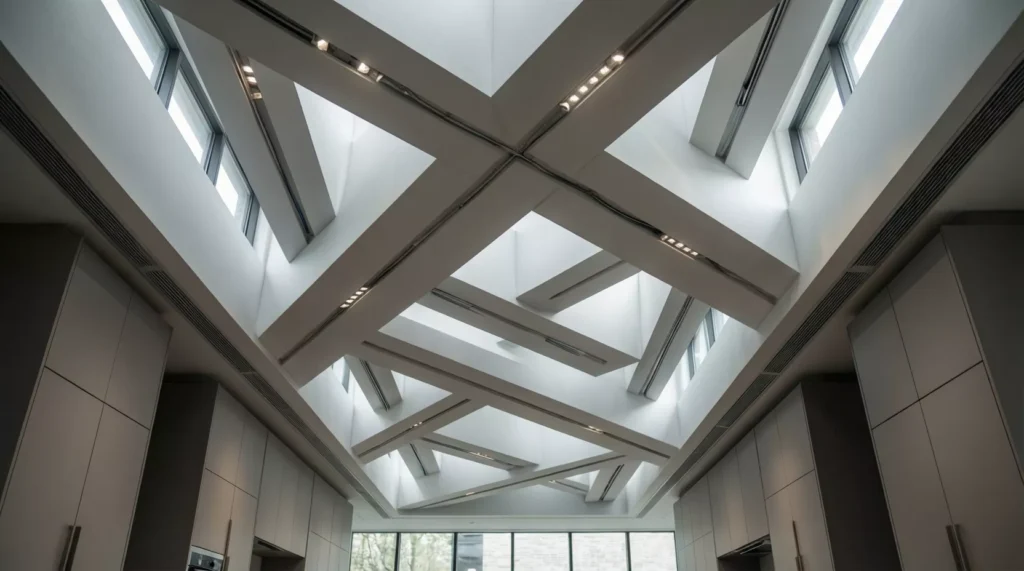
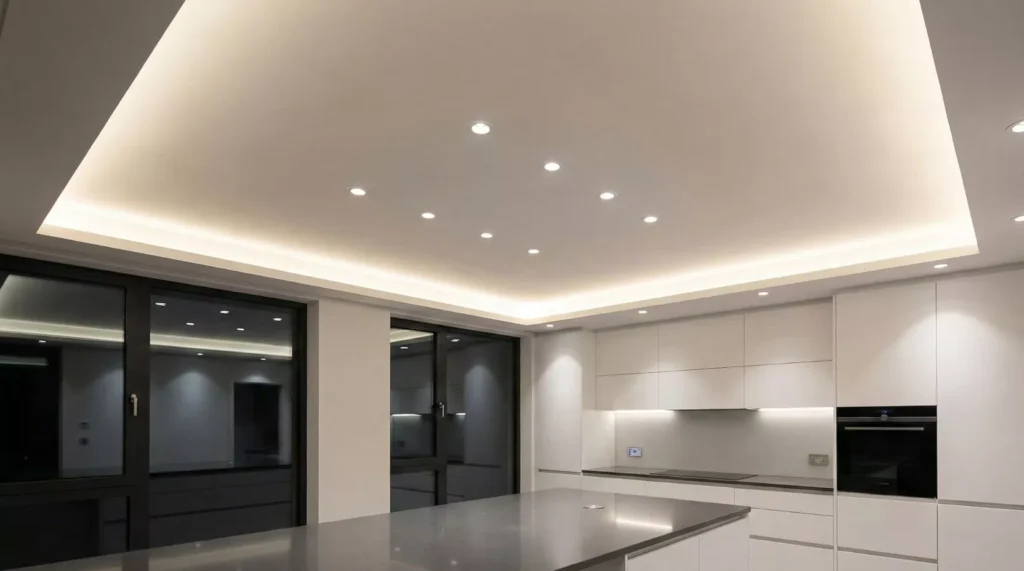
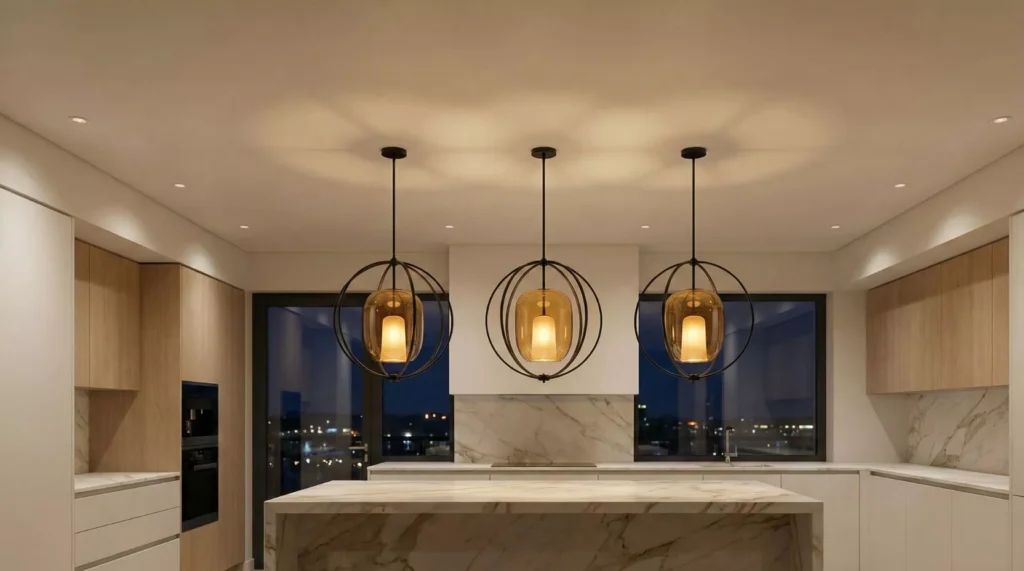
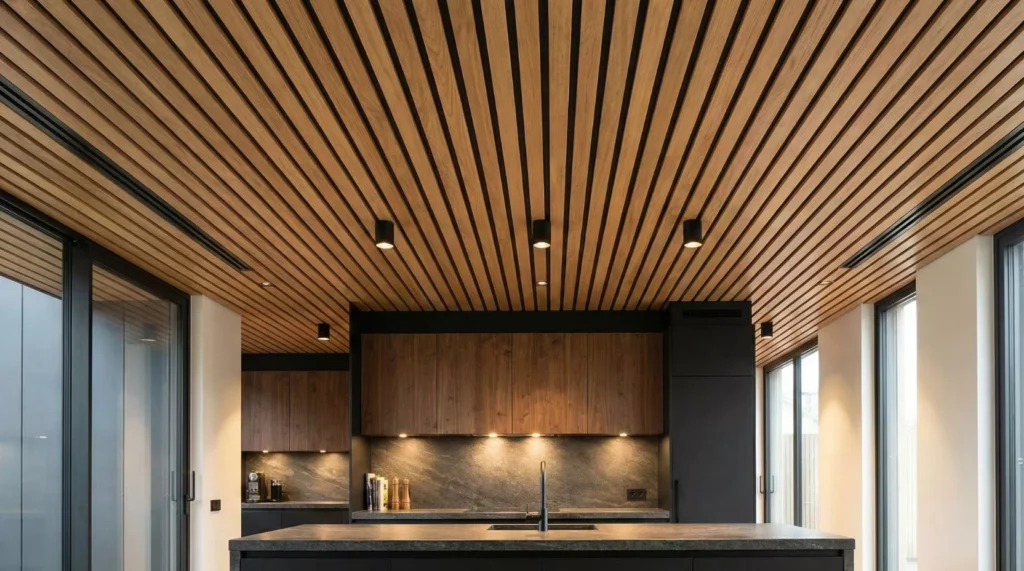
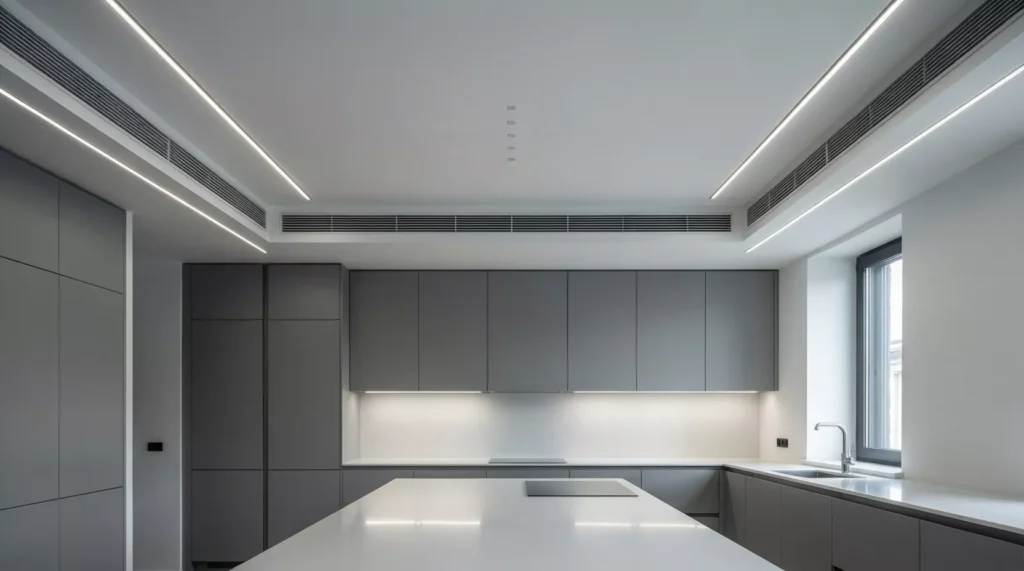
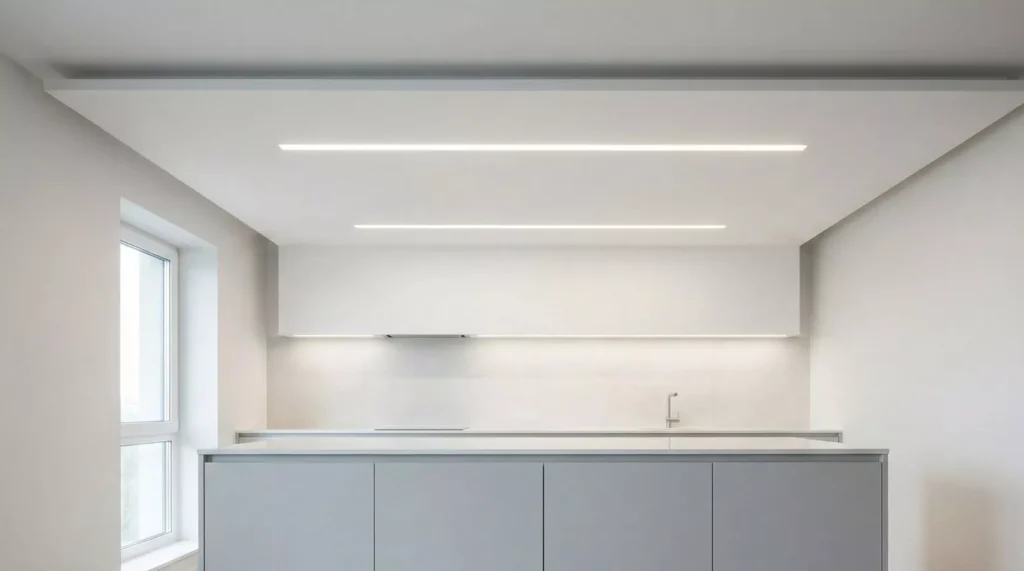
Why Kitchen Ceiling Design is Important?
Kitchen ceilings are exposed to more stress than ceilings in other rooms. Heat, moisture, grease, smoke, and constant lighting demands make ceiling design both a functional and aesthetic decision.
A thoughtfully designed kitchen ceiling:
-
Improve lighting efficiency and ambiance
-
Conceal wiring, ducts, and exhaust systems
-
Enhance the sense of space and height
-
Complement cabinets, flooring, and walls
-
Add character and visual interest
In modern homes—especially apartments and open-plan layouts—the ceiling often ties the entire living space together.
Popular Kitchen Ceiling Design Styles
Modern Kitchen Ceiling Design Ideas
Modern kitchen ceilings focus on simplicity, clean lines, and functionality. These designs often use gypsum or plasterboard with minimal layers and neutral colors such as white, beige, or light grey.
Key features:
-
Flat or subtly layered ceilings
-
Recessed LED lights
-
Hidden cove lighting for soft glow
-
Seamless integration with cabinets
Modern ceiling designs work best in homes that value clarity, order, and uncluttered visuals.
Minimalist Kitchen Ceiling Ideas
Minimalist ceilings take modern design a step further by eliminating visual noise. The goal is to let lighting and proportion do the work.
Best practices:
-
Single-level ceilings
-
Matte finishes
-
Evenly spaced recessed lights
-
No decorative moldings
Minimalist ceiling designs are ideal for small kitchens, studio apartments, and contemporary homes where calm and balance are priorities.
Classic and Contemporary Ceiling Designs
If you prefer timeless appeal, contemporary ceiling designs blend modern materials with subtle decorative elements.
Typical elements include:
-
Soft curves or gentle layers
-
Warm lighting tones
-
Neutral colors with texture
-
Symmetry in lighting placement
These designs age well and suit homeowners who want elegance without following short-lived trends.
False Ceiling Design Ideas for Kitchens
False ceilings (also known as suspended ceilings) are among the most popular choices for kitchens today. They provide space to hide wiring, ducts, and pipes while improving lighting design.
Gypsum False Ceiling Designs
Gypsum ceilings are lightweight, smooth, and highly customizable. They are widely used in modern kitchens due to their clean finish and compatibility with lighting.
Advantages:
-
Easy to shape and layer
-
Excellent for recessed and cove lighting
-
Smooth, premium appearance
-
Cost-effective
Gypsum ceilings are suitable for both small and large kitchens, especially where modern aesthetics are desired.
POP (Plaster of Paris) Ceiling Designs
POP ceilings are often chosen for decorative or artistic ceiling designs.
Best suited for:
-
Traditional or luxury kitchens
-
Layered or patterned ceilings
-
Homes that want a handcrafted look
While POP allows more decorative freedom, it may require more maintenance than gypsum in high-moisture environments like kitchens.
Modular and Panel-Based Ceilings
For homeowners seeking speed and practicality, modular ceilings made of PVC, metal, or engineered panels are an excellent option.
Why choose modular ceilings?
-
Fast installation
-
Moisture-resistant materials
-
Easy maintenance and replacement
-
Ideal for rental homes or apartments
These ceilings prioritize functionality while still offering modern design options.
Kitchen Ceiling Lighting Ideas
Lighting is one of the most important reasons homeowners opt for false ceilings. The ceiling determines how light spreads across the kitchen.
Recessed Lighting for Kitchens
Recessed LED lights are the most common choice for kitchens.
Benefits:
-
Clean, clutter-free look
-
Focused task lighting for countertops
-
Energy-efficient and long-lasting
For best results, lights should be evenly spaced and aligned with work zones such as sinks, stoves, and prep counters.
Cove Lighting for Ambience
Cove lighting is installed in hidden ledges within the ceiling, creating indirect illumination.
Why it works:
-
Adds depth and dimension
-
Creates a warm, inviting atmosphere
-
Enhances ceiling layers
Cove lighting is ideal for evening use and open kitchens connected to living spaces.
Pendant Lights and Statement Fixtures
Pendant lights are often used above kitchen islands or dining counters.
Design tips:
-
Keep ceiling design simple to highlight fixtures
-
Match pendant style with overall kitchen theme
-
Use warm light for cozy effect
Statement lighting works best when used selectively, not throughout the entire ceiling.
Kitchen Ceiling Design Ideas for Small Kitchens
Small kitchens require clever ceiling design to avoid a cramped feeling.
Effective strategies:
-
Use light colors like white or cream
-
Avoid deep or bulky ceiling layers
-
Choose reflective finishes
-
Use fewer but brighter light sources
Flat or single-layer ceilings with well-placed lighting can make a small kitchen feel more open and spacious.
Wooden and Natural Material Ceiling Ideas
Wooden ceilings add warmth, texture, and a natural feel to kitchens.
Popular approaches:
-
Wooden slats combined with gypsum
-
Veneer panels for lighter weight
-
Wood accents instead of full wooden ceilings
Wood works especially well in modern, Scandinavian, and rustic kitchens. Always ensure proper treatment to resist moisture and heat.
Luxury Kitchen Ceiling Design Ideas
Luxury ceilings focus on layering, symmetry, and premium finishes.
High-end design elements include:
-
Multi-layered false ceilings
-
Cove + recessed lighting combinations
-
Metallic or textured finishes
-
Balanced geometric patterns
Luxury ceiling designs are often paired with high-gloss cabinets, stone countertops, and designer lighting.
Open Kitchen Ceiling Design Ideas
Open kitchens demand ceiling continuity between the kitchen and adjacent living or dining area.
Best practices:
-
Maintain consistent ceiling height
-
Use similar lighting temperature across spaces
-
Subtly define kitchen area using light placement
-
Align ceiling design with cabinetry lines
A cohesive ceiling helps the entire space feel intentional and harmonious.
Practical Considerations Before Choosing a Kitchen Ceiling Design
Before finalizing a ceiling design, consider these essential factors:
Ceiling Height
Low ceilings benefit from simple, flat designs. High ceilings allow more layering and dramatic lighting.
Ventilation and Chimney Placement
Ensure the ceiling design accommodates exhaust ducts without awkward drops or visible pipes.
Maintenance and Cleaning
Kitchen ceilings should be easy to clean and resistant to grease buildup.
Budget Planning
Ceiling costs vary based on material, complexity, and lighting. Always balance aesthetics with long-term practicality.
Trending Kitchen Ceiling Design Ideas in 2026
As design preferences evolve, several ceiling trends are shaping modern kitchens:
-
Minimal layered ceilings
-
Warm, neutral lighting tones
-
Smart lighting integration
-
Sustainable and low-maintenance materials
-
Seamless ceiling-to-cabinet alignment
Trends now focus less on decoration and more on experience, efficiency, and longevity.
Frequently Asked Questions
Which ceiling design is best for kitchens?
Gypsum false ceilings with recessed and cove lighting are the most versatile and widely preferred.
Is a false ceiling suitable for small kitchens?
Yes, if designed simply. Avoid heavy layers and use bright lighting.
What color is best for kitchen ceilings?
White and light neutrals reflect light well and make the space feel larger.
How much does a kitchen ceiling design cost?
Costs vary depending on material, lighting, and complexity, ranging from budget-friendly to premium options.
Final Thoughts: Choosing the Right Kitchen Ceiling Design
A kitchen ceiling is far more than a surface above your head—it’s a design tool that shapes how your kitchen looks and functions every day. Whether you prefer modern minimalism, warm wooden textures, or luxurious layered designs, the key is to align ceiling style with your kitchen’s size, layout, and lifestyle.
Investing in the right ceiling design ensures better lighting, improved comfort, and a kitchen that feels complete and thoughtfully designed.